





 |
Testing Fees |
 |
Other Lab Services |
 |
GAD Corner |
DOST, UP Diliman commit to innovation and sustainability thru collab research
- Details
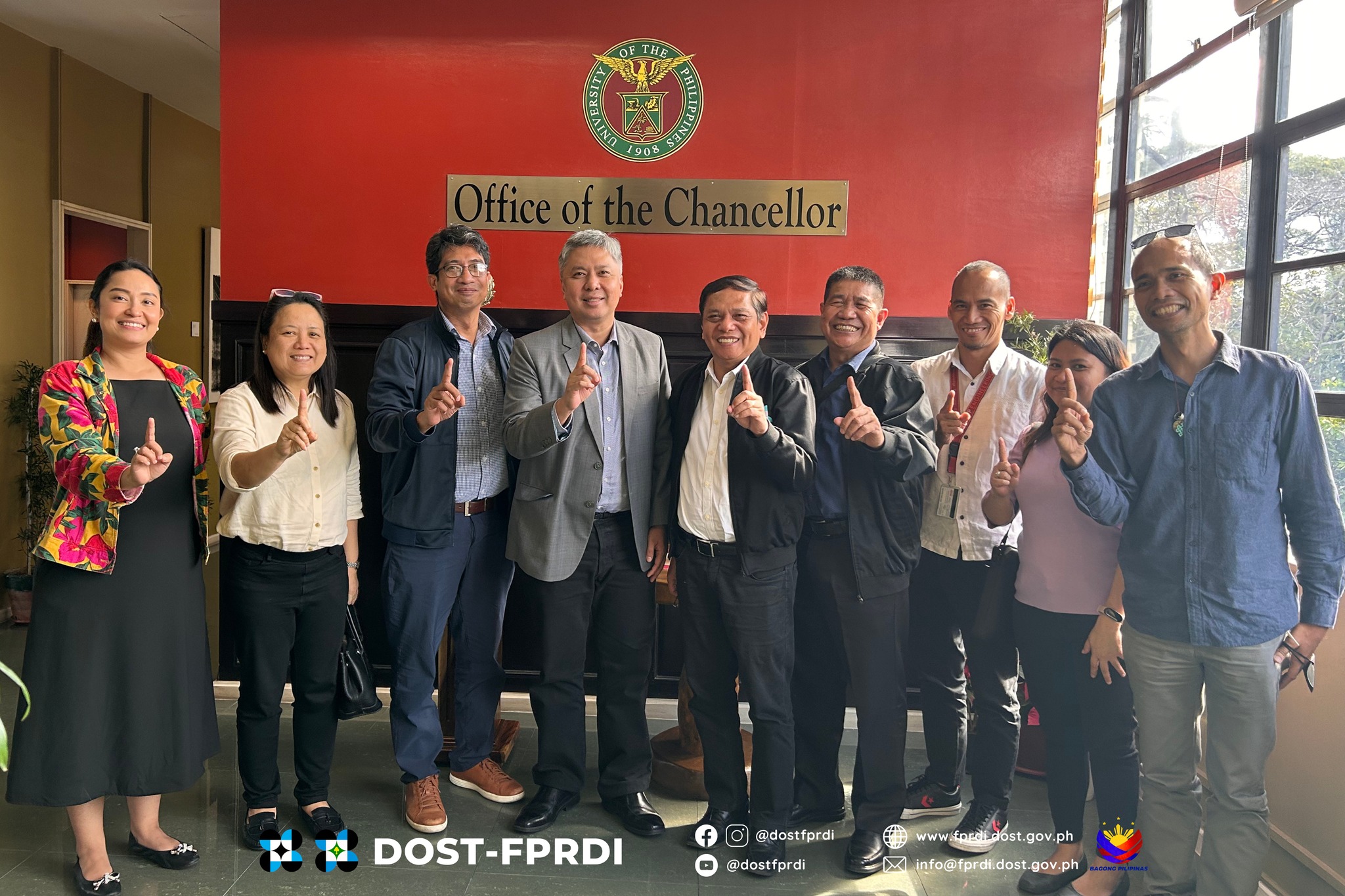
The MOU signing last 12 February 2025 was led by DOST-FPRDI Director Cabangon (5th from left) and UP Diliman Chancellor Edgardo Carlo L. Vistan II (4 th from left). It was attended by DOST-FPRDI researchers and management team, and UP Diliman academic staff.
The DOST-Forest Products Research and Development Institute (DOST-FPRDI) strengthens its commitment to advance research and academic collaboration through a newly forged partnership with the University of the Philippines Diliman (UPD).
DOST eyes potential of forest products amid rising dengue cases
- Details
Forest products are being eyed by the Department of Science and Technology (DOST) as natural and cost-effective protection against mosquito-borne diseases.
Experts from the DOST-Forest Products Research and Development Institute (DOST-FPRDI) have looked at the potential of cinnamon barks, and pili and almaciga resins made into incense cones and sticks as insect repellent. The materials used are process residues or wastes from essential oil production, and naturally possess insect-repelling properties.
“DOST is one with the nation in finding ways to curb the ‘worrisome rise’ of dengue cases. The Department has consistently and actively contributed to addressing health concerns through R&D, technological advancements, and community-based interventions. As dengue cases continue to soar, so does the need for sustainable solutions to it,” DOST Secretary Renato U. Solidum, Jr. stressed.
DOST features bamboo musical instruments in Quezon’s Kaway Festival
- Details
The DOST-Forest Products and Development Institute (DOST-FPRDI) recently showcased its innovations on bamboo musical instruments (BMI) during the Tagkawayan Quezon’s Kaway Festival.
Among the bamboo instruments played and demonstrated during the activity were tongatong (bamboo stamping tubes), bungkaka (bamboo buzzer), patteteg (bamboo plate/bar), gabbang (bamboo xylophone), saggeypo (panpipe), tongali (nose flute), and kubing (jaw harp). Highlight of the event was the interactive community playing of BMIs with the participants.
Thru a technology demonstration, DOST FPRDI also featured how locally available bamboo could be crafted into high-quality musical instruments to support sustainable livelihood and cultural preservation.