





 |
Testing Fees |
 |
Other Lab Services |
 |
GAD Corner |
DOST-FPRDI Celebrates 68th Anniversary with National Conference on Forest Innovation
- Details
DOST-FPRDI Celebrates 68th Anniversary with National Conference on Forest Innovation
The DOST- Forest Products Research and Development Institute (DOST-FPRDI) will hold a conference to celebrate its 68th anniversary on July 4, 2025, at The Bellevue Manila Hotel in Alabang, Muntinlupa. The event commemorates nearly seven decades of the Institute’s pioneering efforts in R&D, technology transfer, and technical services for forest-based industries.
DOST Secretary Renato U. Solidum Jr. and DOST Undersecretary for Research and Development Leah J. Buendia will lead the roster of dignitaries attending the event, alongside other key DOST officials and individuals who have significantly advanced forest product research.
Expected also to attend the event are the Institute’s sustainability partners— individuals who have consistently supported DOST-FPRDI’s programs and initiatives.
These key supporters include Senator Juan Miguel F. Zubiri, who championed the Institute’s 2025 budget during recent congressional hearings; Bukidnon 1st District Rep. Jose Manuel F. Alba, a strong advocate of bamboo technology initiatives; and Los Baños, Laguna Mayor Neil Andrew N. Nocon, who is a prospective partner for the Institute’s sustainable and disaster risk reduction-related technologies.
DOST exhibit to showcase innovative, modern uses of pandan
- Details
The Department of Science and Technology - Forest Products Research and Development Institute (DOST-FPRDI) is set to launch an exhibit that will celebrate the local art of pandan weaving, and showcase the versatility of pandan for high-value products.
Opening on July 1, 2025, at DOST-FPRDI’s Forest Products Innovation and Training Center (FPITC) in Los Banos, Laguna, the exhibit INTERCONNECT3D: Lalang Pandan will explore exciting new directions and design potential of pandan weaving in the Philippines.
DOST Secretary Renato U. Solidum, Jr. is positive that the outputs from the project will greatly benefit local weaving communities.
“By harnessing the potential of pandan and turning it into high-value products, we not only preserve our weaving heritage, but also make sustainable economic opportunities for our communities. We empower local artisans, elevate Filipino craftsmanship, and pave the way for globally competitive and science-driven enterprises through initiatives like these,” said Secretary Solidum.
Central to the exhibit is the concept of interconnectedness. “Just as pandan strips become stronger when woven together, the exhibit will reflect how tradition, innovation, and community interweave to create culturally inspired products that blend traditional weaving techniques with modern design aesthetics,” explained artist and industrial designer Chris Johnniel France Rana.
DOST-FPRDI’s 68th year highlights connection between people and forest
- Details
Be treated to a sensory experience this July as the Department of Science and Technology-Forest Products Research and Development Institute (DOST-FPRDI) marks its 68th Anniversary with exciting activities for the public.
Themed Rooted in Senses, Growing Innovations: A Celebration of Forest Products, this year’s celebration highlights the Institute’s remarkable legacy of science-driven innovation and the deep connection between people and the forest.
Among the activities is an exhibit on July 1, 2025 that will feature the innovative uses of pandan. A feast to the eyes, the Lalang Pandan exhibit will showcase unique and creatively designed handicrafts and furniture, and will highlight the ingenuity of local pandan weavers from Luisiana, Laguna.
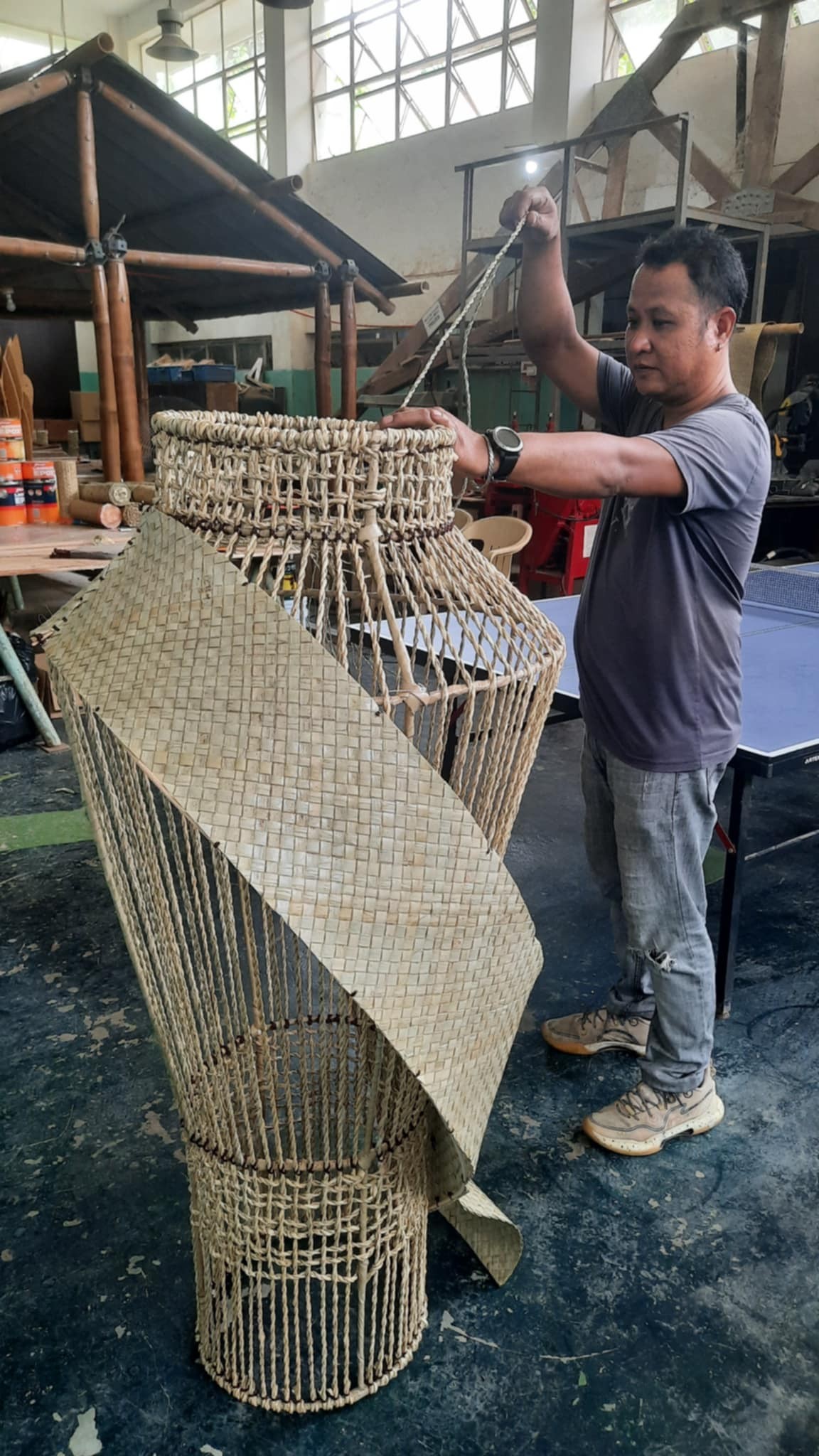
A modern take on the traditional lampara, the 4-feet-tall chandelier Lalampara is among the many pandan displays at the Lalang Pandan exhibit on July 1 at the DOST-FPRDI headquarters in Los Banos, Laguna